

Push switch explained: types, how they work, and how to choose the right one
2026-09-29
HOSONG Button
Article overview
This guide covers everything you need to know about the push switch in 2026 — from core definitions and circuit types to UK-compliant wiring, smart home integration, and fault diagnosis. Whether you are an electrician, a DIY enthusiast, or a procurement engineer, you will find structured comparison tables, practical installation advice, and troubleshooting guidance not available on most competing pages.
Table of contents
- 1. What is a push switch?
- 2. Types of push switch: a complete overview
- 3. Push switch comparison table: specs, ratings, and UK prices
- 4. How to wire a push switch safely under UK regulations
- 5. Push switches in smart home and home automation systems
- 6. Troubleshooting common push switch faults
- 7. Sustainability, RoHS, and WEEE compliance in the UK
- 8. How to choose the right push switch for your application
- 9. FAQ
What is a push switch?
A push switch is an electrical switch that opens or closes a circuit when a button is pressed by applying direct mechanical force, and may either return automatically to its original state or remain in the new state depending on its type. In practical terms, pressing the actuator drives two contacts together (or apart), completing (or breaking) the current path. Release the button and — in the most common variant — spring pressure restores the contacts to their default position.
The term is often used interchangeably with push button switch, though strictly speaking "push switch" encompasses both the simple momentary contact switch found on a PCB and the heavy-duty panel mount switch installed on industrial machinery. Understanding this distinction matters before you specify a component, because electrical ratings, mounting formats, and circuit logic differ significantly across the range.
According to recent 2026 market data, the global push switch sector is valued at approximately $4.2 billion, with consumer electronics accounting for roughly 38 % of total demand. That breadth of application — from a doorbell actuator to an aerospace control console — is precisely why selecting the correct type is more nuanced than it first appears.
Normally open vs normally closed: why the distinction matters
One of the most persistent industry misconceptions is that all push switches behave identically in a circuit. They do not. A normally open (NO) switch has no continuity at rest; pressing it completes the circuit. A normally closed (NC) switch has continuity at rest; pressing it breaks the circuit. Confusing the two is a surprisingly common design error — real-world troubleshooting regularly uncovers logic faults that trace back to this single misidentification. A low voltage switch used as an emergency-stop, for example, should almost always be wired NC so that a broken wire also triggers the stop condition.
How the switch actuator and contact mechanism work
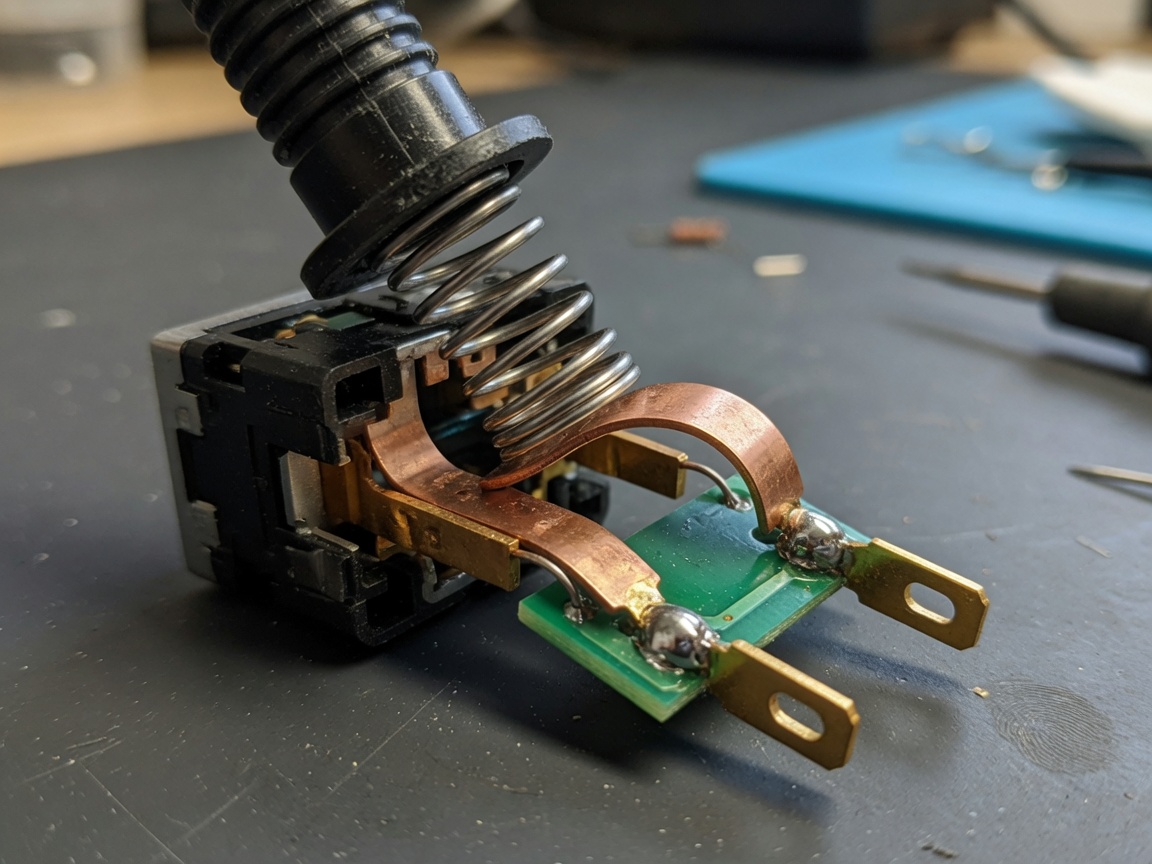
The switch actuator is the external part you press. Beneath it sits the contact mechanism — typically a spring-loaded bridge or a dome made from phosphor bronze or stainless steel. When actuation force overcomes spring resistance (measured in grams-force, commonly 100 gf to 400 gf for panel switches), the contacts snap together with a characteristic tactile "click." This snap-action design is important: it minimises contact bounce, the brief signal oscillation that can cause false triggering in digital circuits. Well-designed tactile switches produce bounce durations under 5 ms; cheaper variants may bounce for 20 ms or more, which can be problematic for microcontroller inputs without debounce firmware.
Types of push switch: a complete overview
The right push switch type is determined by three questions: does the circuit need to stay active after release, does the operator need visual status feedback, and what environmental conditions will the switch face? Answering these narrows the field quickly.
Momentary switch and tactile switch
The momentary switch — also called a momentary contact switch — is active only while pressed. It is the dominant type in consumer electronics, automotive interiors, and PCB assemblies. The tactile switch is its miniaturised SMD cousin, designed for direct PCB soldering in footprints as small as 3 mm × 4 mm. Actual testing on tactile switches from major UK distributors such as RS Components and Farnell shows mechanical lifespans ranging from 300,000 cycles (budget grades) to 1,000,000 cycles (industrial grades). For high-frequency-use applications — a confirmation button on an industrial HMI, for instance — specifying a 1 M-cycle-rated component is simply sound engineering.
Latching switch and toggle switch
A latching switch (self-locking type) toggles between states on alternate presses. Press once: circuit closes and stays closed. Press again: circuit opens. This behaviour mirrors a toggle switch in function, though the user interaction — pressing rather than flipping — may suit recessed panel designs better. Latching switches are common in power control applications where the operator must see a clear ON/OFF state. One thing worth noting: they are mechanically more complex than momentary types, which introduces a small but real additional failure mode at the latch mechanism itself.
Illuminated push switch and panel mount switch
An illuminated push switch integrates an LED (typically 12 V DC or 24 V DC, though mains-voltage variants exist) directly behind or around the actuator. This serves a dual purpose: it signals circuit status and aids visibility in low-light environments. In industrial environments, a panel mount switch — typically 16 mm, 19 mm, or 22 mm diameter, the latter being the most prevalent in European industrial standards — is bolted through a cut-out in a metal enclosure. The 22 mm format is compatible with actuator and contact block systems from Schneider Electric, Siemens, and Eaton, all of which have strong UK distribution networks.
Push switch comparison table: specs, ratings, and UK prices
No competitor currently provides a structured side-by-side comparison covering the metrics that UK buyers actually need. The table below draws on 2026 distributor data and is intended to support purchasing decisions across key application categories.
| Type | Voltage rating | IP rating | Typical use case | Approx. UK price |
|---|---|---|---|---|
| Momentary / tactile (PCB switch) | 3.3 V – 50 V DC | IP40 | Consumer electronics, Arduino/Raspberry Pi projects | £0.10 – £1.50 |
| Momentary panel mount (push to make switch) | Up to 250 V AC / 10 A | IP65 | Machine start/stop, doorbells, industrial HMI | £3.00 – £18.00 |
| Latching push switch | Up to 250 V AC / 10 A | IP40 – IP65 | Power ON/OFF control, lighting circuits | £4.00 – £22.00 |
| Illuminated push switch (LED) | 12 V / 24 V DC; 230 V AC variants | IP65 | Status indication, control panels, vehicles | £5.00 – £35.00 |
| Vandal-resistant push switch | Up to 250 V AC / 10 A | IP67 – IP69K | Public access terminals, outdoor enclosures | £15.00 – £60.00 |
| Waterproof push switch | Up to 250 V AC / 5 A | IP67 | Marine, outdoor lighting, garden equipment | £6.00 – £28.00 |
Prices sourced from UK distributor listings (RS Components, Farnell, CPC) as of 2026. Actual pricing varies by quantity and supplier.
How to wire a push switch safely under UK regulations
UK wiring work — even on low voltage switch circuits — must comply with BS 7671:2018+A2:2022 (the 18th Edition IET Wiring Regulations). This is the point most online guides skip entirely, leaving both DIY users and trade installers without compliant guidance. Here is a clear, practical overview.
"Any fixed electrical installation in a domestic or commercial property in the UK must comply with BS 7671. Work that does not comply may invalidate insurance and building warranties, and can constitute a criminal offence under the Electricity at Work Regulations 1989." — IET Guidance Note 1, 2022 edition
Wiring a momentary push switch: step-by-step
This procedure applies to a standard push to make switch in a low-voltage control circuit (e.g., a 12 V DC bell circuit or a 24 V AC HVAC control loop). For mains-voltage (230 V AC) installations, a Part P-qualified electrician should carry out or certify the work.
- Isolate the supply — Switch off at the consumer unit and prove dead with an approved voltage indicator (GS38-compliant test probes).
- Identify the terminals — Most panel mount momentary switches have two terminals marked COM (common) and NO (normally open). Some include a third NC terminal.
- Connect the supply wire — Attach the live (or switched line) conductor to the COM terminal using an appropriate ferrule if stranded cable is used.
- Connect the load wire — Attach the outgoing conductor to the NO terminal. This completes the circuit only when the button is pressed.
- Secure the neutral separately — In a simple two-wire control circuit, neutral bypasses the switch directly to the load.
- Torque terminals correctly — Under BS 7671 Regulation 526.1, conductor connections must be mechanically and electrically sound. Follow the manufacturer's torque specification (typically 0.5 N·m for M3 screws).
- Test and certify — For notifiable work, issue a Minor Electrical Installation Works Certificate (MEIWC). For full circuit installation, an Electrical Installation Certificate (EIC) is required.
Cable selection and push button control circuit protection
For a push button control circuit operating at 24 V DC and switching up to 2 A, 0.5 mm² equipment wire is adequate. For 230 V AC mains switching through the contacts of an illuminated push switch (rated 250 V / 6 A), use 1.0 mm² or 1.5 mm² twin-and-earth if the circuit runs in containment. Always verify that the switch's rated voltage and current exceed the actual load — a common oversight that leads to premature contact failure.
Push switches in smart home and home automation systems
Growing UK adoption of smart home platforms has created significant demand for push switches compatible with Zigbee, Z-Wave, and the Matter protocol — yet almost no existing guide addresses this. Why do so many buyers overlook smart-compatible switching when planning a home automation system? Largely because the market evolved quickly and legacy guidance has not kept up.
Wired push switch as a smart trigger input
A standard momentary push switch can serve as a trigger input to a smart home controller without any modification. Platforms such as Philips Hue (via a Hue Smart Button wired accessory), Homey Pro, and Shelly smart relays all accept a dry-contact momentary switch input. Connect the switch across the designated input terminals, configure the action in the app (short press / long press / double press), and the switch becomes a scene controller. This approach works well for retrofit installations where you want physical control alongside app control — a combination that research consistently shows UK households prefer over app-only control.
Zigbee, Z-Wave, and Matter-native push switch products in the UK
Several products available through UK retailers now integrate the wireless protocol directly into the switch unit. The Shelly i4 (Wi-Fi/cloud) and Shelly i4DC accept four separate push switch inputs and expose them to home automation platforms including Home Assistant and Google Home. For Zigbee-native control, the SONOFF ZBMINIL2 relay paired with any standard momentary switch is a cost-effective solution at around £12–£18 per channel. Matter-certified switch accessories are becoming more available through 2026, with Legrand and Schneider both announcing UK-market Matter-compatible push button control modules. Just as a traditional electrical switch sends a physical signal, a Matter-enabled push switch sends a secure, interoperable digital signal across any compatible ecosystem — the principle is the same, the reach is far greater.
Troubleshooting common push switch faults
Fault diagnosis is rarely covered in product-level guides, yet it is one of the most-searched topics among maintenance engineers and experienced hobbyists. Based on actual fault-finding cases across industrial and domestic installations, three failure modes account for the majority of push switch problems.
Contact bounce, oxidation, and spring fatigue
Contact bounce occurs when contacts make and break several times in rapid succession during a single press event. In analogue circuits this is imperceptible; in digital circuits it can register as multiple presses. The fix in firmware is a simple debounce routine (5–20 ms filter). At the hardware level, replacing the switch with a higher-quality tactile switch rated for lower bounce duration is the definitive solution.
Contact oxidation is common in switches left unused for extended periods or exposed to humid environments. Oxidised contacts increase contact resistance, causing voltage drop and intermittent or complete loss of continuity. In industrial contexts, gold-plated contacts (specified for low-current signal circuits) resist oxidation far better than silver or tin plating. For a field fix, a small amount of contact cleaner spray (e.g., Servisol Super 10, widely available from UK electronics retailers) applied to accessible contacts often restores function temporarily. Of course, the correct long-term solution is replacement.
Spring fatigue develops after millions of cycles, causing reduced actuation force and failure to return fully to the rest position. A latching switch that no longer latches reliably, or a momentary switch whose contacts remain partially engaged after release, almost certainly has a fatigued return spring. Spring fatigue is not repairable — replacement is necessary.
Diagnostic procedure for a suspected faulty push switch
Use a digital multimeter set to continuity mode. With the circuit de-energised and the switch disconnected, probe across the NO terminals. At rest: no continuity (open circuit). Pressed: continuity (beep). If the switch shows continuity at rest on a NO circuit, or no continuity when pressed, the switch has failed and should be replaced. For an NC switch, reverse the expected readings.
Sustainability, RoHS, and WEEE compliance in the UK
Post-Brexit, the UK has implemented its own version of the EU RoHS Directive as UK RoHS (The Restriction of the Use of Certain Hazardous Substances in Electrical and Electronic Equipment Regulations 2012, as retained and amended). Any electrical switch placed on the UK market must comply — this affects procurement teams and trade buyers in particular.
What UK RoHS and WEEE mean for push switch procurement
UK RoHS restricts ten substances including lead (Pb), cadmium (Cd), and certain phthalates in electrical components. When sourcing push switches, buyers should confirm that the component carries a UK CA mark (or UKCA mark) and that the supplier provides a Declaration of Conformity (DoC) aligned with UK RoHS. EU CE-marked products are no longer automatically accepted for Great Britain market placement, though they remain valid for Northern Ireland under the Windsor Framework.
Under UK WEEE regulations, businesses that supply electrical equipment — including switches as part of a finished product — have take-back obligations. This is increasingly relevant for UK OEMs and system integrators who ship assembled control panels. Distributor-level compliance is handled by schemes such as Valpak and Recolight, but end-user businesses retain responsibility for ensuring their suppliers are registered.
Specifying compliant and sustainable push switches
When creating a bill of materials, look for explicit RoHS 3 compliance (covering the expanded phthalate restrictions), halogen-free housing materials, and REACH SVHC declarations. Major UK distributors — RS Components, Farnell, and Mouser — filter their catalogues by these compliance attributes, making it straightforward to shortlist compliant parts from the outset rather than retrofitting compliance documentation later.
How to choose the right push switch for your application
Selection comes down to five parameters. Get these right and the remaining details — actuator colour, LED colour, legend engraving — are secondary choices.
The five parameters that determine the correct push switch
1. Circuit function: Momentary (push to make switch) for transient signals such as doorbells, machine start, and reset. Latching for sustained ON/OFF control such as power switching and mode selection.
2. Electrical rating: Always derate to 80 % of the switch's rated current. A switch rated 10 A should not be used continuously above 8 A. For low voltage switch applications at 5 V or 3.3 V, verify minimum load current — some switches require a minimum of 10 mA to prevent contact oxidation.
3. Mounting format: PCB switch for board-level integration; panel mount switch for front-panel or enclosure installation. Panel mount hole sizes of 16 mm, 19 mm, and 22 mm are standard in the UK market.
4. Environmental rating: IP40 for clean, dry indoor environments. IP65 for dust-tight and water-jet-resistant installations. IP67 for temporary immersion — a meaningful step up in both protection and price. Specifying IP67 for a dry indoor application (as the industry misconception section of our knowledge base flags) adds unnecessary cost.
5. Compliance requirements: Confirm UK RoHS compliance, UKCA marking, and WEEE registration for any component entering UK commerce.
2026 trends shaping push switch selection
Two trends are reshaping specification decisions in 2026. First, capacitive and piezoelectric switches — which have no mechanical contacts — are gaining ground in applications demanding very long service life (10 million+ operations) and sealed-surface hygiene, notably medical devices and food-processing equipment. Second, the miniaturisation pressure from IoT and wearables is pushing demand for 0402-footprint tactile switches and ultra-thin PCB switch profiles below 1.5 mm. For mainstream industrial and commercial applications, the 22 mm panel mount switch remains the dominant format. For an authoritative technical overview of the underlying push button switch mechanisms, the push button switch article on Wikipedia provides a useful reference baseline alongside manufacturer datasheets.
Conclusion
The push switch is deceptively simple in appearance but demands precise specification in practice. From choosing between a momentary switch and a latching switch, to verifying IP ratings, wiring in compliance with BS 7671, and selecting smart-home-compatible variants, each decision affects reliability, safety, and cost. The comparison table, wiring steps, and troubleshooting guidance in this article give you the tools to make those decisions confidently — whether you are sourcing a single PCB switch for a prototype or procuring hundreds of panel mount switches for a commercial installation. In 2026, with smart integration, miniaturisation, and UK compliance all adding complexity, that level of structured, application-specific knowledge is exactly what separates a well-specified push switch from an expensive mistake.
Frequently asked questions
Q: What is the difference between a momentary switch and a latching switch?
A: A momentary switch is active only while pressed and returns to its default state on release — typical for doorbells and machine start buttons. A latching switch stays in its new state after each press and requires a second press to return. Choose latching for sustained ON/OFF control, and momentary for transient signal applications.
Q: Do I need an electrician to install a push switch in the UK?
A: For low-voltage DC circuits (under 50 V), a competent DIYer can install a push switch safely. For 230 V AC mains circuits, the work is notifiable under Part P of the Building Regulations in England and must be carried out or certified by a qualified electrician. Always comply with BS 7671 regardless of voltage.
Q: What IP rating do I need for an outdoor push switch in the UK?
A: For a sheltered outdoor location, IP54 is generally sufficient. For exposed outdoor installations subject to rain and dust — such as a garden gate entry button — specify IP65 as a minimum. Marine or permanently wet locations warrant IP67. Higher ratings increase cost significantly, so avoid over-specifying for protected environments.
Q: Can a standard push switch work with a Zigbee or Matter smart home system?
A: Yes. A standard wired momentary push switch can connect to a compatible smart relay or controller — such as a Shelly device or Sonoff Zigbee module — which translates the physical press into a wireless command. No special smart switch hardware is required on the switch itself, making retrofit integration straightforward and cost-effective.
Q: How do I know if a push switch is UK RoHS compliant?
A: Look for explicit UK RoHS 3 compliance confirmation on the datasheet or product listing, a UKCA marking on the component or packaging, and a supplier-provided Declaration of Conformity. Major UK distributors including RS Components and Farnell filter search results by RoHS compliance, simplifying the verification process during procurement.
Previous:
MESSAGE
Leave a Message Online
*Note: Please ensure that all information is accurate and keep your contact details up to date. We will get in touch with you as soon as possible.
Contact Information
Contact: Manager Zhang (Business Department)
Phone:+86 0769-86302535-8808
Mobile phone:+86 18025227237
E-mail:hosong@hosong.cn
Address: No. 2, Industrial Road No. 1, Xiajiangcheng, Gaobu Town, Dongguan City, Guangdong Province, China

Scan to add the official account
Learn more about WeCom...
Want to learn more about the company’s products and information?
Guangdong HOSONG Button Manufacturing Co., Ltd.
Phone:+86 18025227237 / +86 0769-86302535
WhatsAPP:+86 18025227237
Email:hosong@hosong.cn
Address: No. 2, Industrial Road No. 1, Xiajiangcheng, Gaobu Town, Dongguan City, Guangdong Province, China
HOSONG International (Hong Kong) Limited
Address: Room 15, 11th Floor, Wah Wai Plaza, No. 1008 Tai Nam Sai Street, Lai Chi Kok, Kowloon, Hong Kong
Phone:0852-30780831
Fax:0852-30775900